, 6 min, Washington SEO Company team
Google Business Profile for Service-Area Businesses in Washington
How a Washington business that travels to customers should set up its Business Profile: hiding the address, picking service areas, and what distance means.
If your customers never come to you, hide your street address on your Google Business Profile and list the places you serve instead. That is the right setup for most Washington plumbers, roofers, cleaners, mobile mechanics and home inspectors. The harder part is choosing those places honestly, because the service-area list tells customers where you go, while your real base still shapes how far your profile reaches in the map results.
Storefront, service-area or hybrid
Google sorts local businesses into three rough types, and the setup follows from which one you are.
A storefront serves customers at its address: a dental office in Olympia, a bakery in Bellingham. It shows its address and usually leaves service areas empty.
A service-area business goes to the customer and doesn't serve anyone at its address. Say a Tacoma electrician runs the business from a home office and a van. That business hides the address and lists service areas.
A hybrid does both. Picture a Spokane appliance repair shop with a counter for walk-in parts sales and technicians who drive to homes. It shows the address, because people do visit, and adds service areas for the house calls.
If you picked the wrong type when you set up the profile, it's easy to fix. A home address on the map invites strangers to your door, and Google's guidelines ask businesses not to show an address where they don't serve customers in person. Profiles that break the guidelines can be suspended.
Hiding the address only removes it from public view. You still enter the real address when you create and verify the profile, and it should be the place you actually work from. Google's guidelines don't accept a mailbox or an unstaffed virtual office as a business location, so an address picked to look closer to Seattle is a risk, not a shortcut.
The full rules are in Google's guidelines for representing your business, and the steps for adding areas are on its service area help page. Read the second one before you edit. It sets limits on how many areas you can add and how far from your base they should reach, and those details can change, so go by the current page rather than an old forum answer.
Choose areas you would take a job in this month
You can enter service areas as cities, counties or ZIP codes. Two working rules:
- List places where you'd accept a booking today. If you'd turn down a call from Everett because of the drive, Everett doesn't belong on the list.
- Use a county when you cover all of it, and cities when you cover part. A painter who works across a whole county can list the county. One who only takes jobs at the north end of it should list those towns.
Keep the list to places you'd stand behind. A profile that claims half the state reads like a lead-generation front to the customers who look closely, and it won't stretch your reach in the map results. The list describes where you go, not where you are. Treat it as information for a customer deciding whether to send you a message.
The Cascades split
The Cascades divide Washington into a wetter west and a drier east, and for most trades they also divide the customer base. A Spokane plumber doesn't list Seattle. Spokane is the largest city in Eastern Washington and sits at the other end of I-90 from Seattle, over Snoqualmie Pass. A homeowner in Seattle with a leaking water heater wants someone who can be there this afternoon, and listing Seattle wouldn't put the Spokane company into Seattle map results anyway. It would only make the profile look less believable.
Some businesses do work both sides. Say a commercial roofing company has a staffed office in Tacoma and a real crew and yard in the Tri-Cities. That's two locations, and each one can have its own profile at its own address, with service areas drawn around each base.
If instead the Tacoma crew drives east a few times a year for large jobs, keep the profile honest to the west side. Write about the eastern projects on your website, where a well-made project page can still show up in regular search results for those towns without bending the profile.
The guide An Olympia Heat Pump Firm: Planning a Year of Search Work can help you set a realistic review period for profile and website changes.
Ferry-served areas
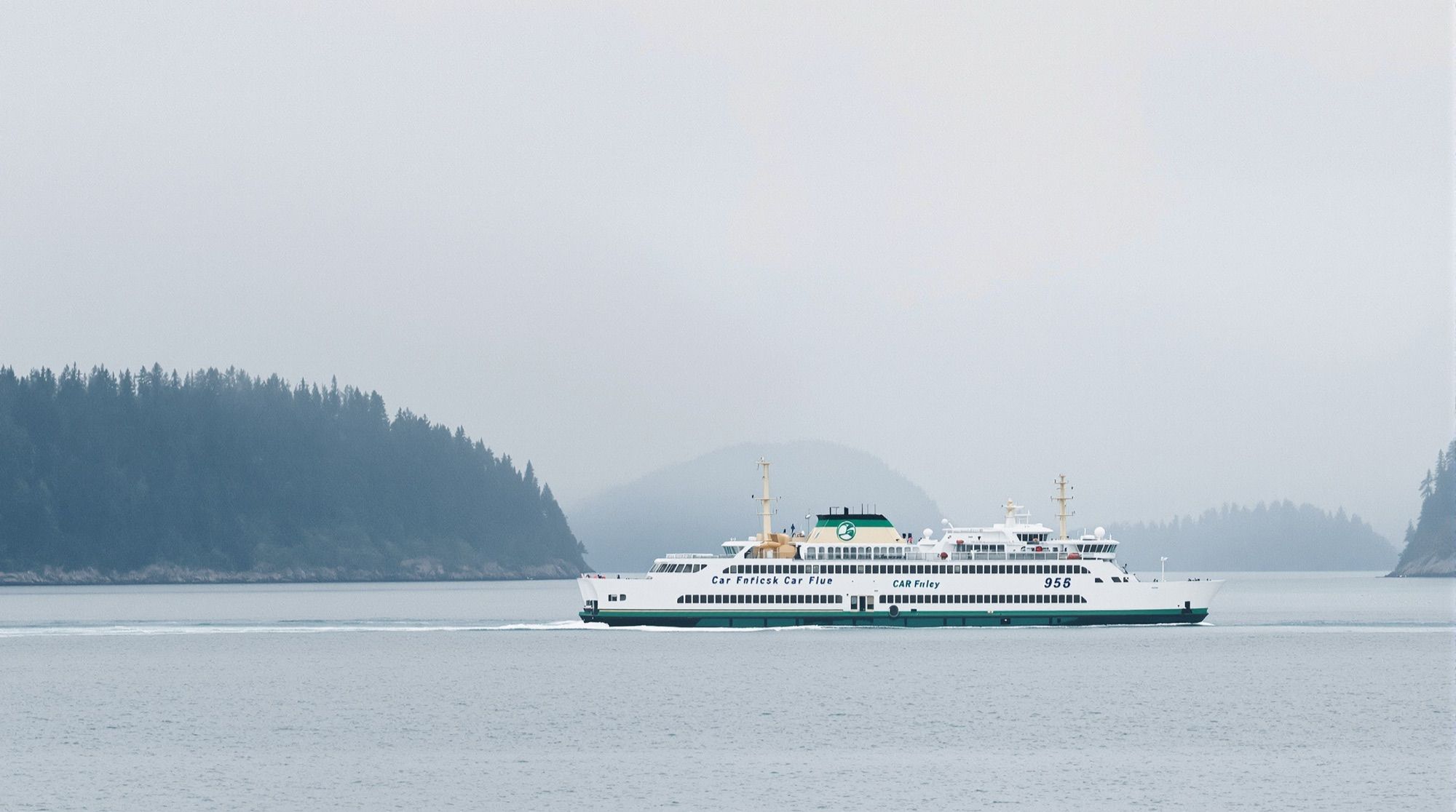
Washington State Ferries cross Puget Sound, and for a service business a ferry changes what "nearby" means. An island home can be close to a Seattle contractor in a straight line and still take longer to reach than a job in Everett once you count the wait for a sailing. Anyone who has watched a boat pull away with their van still in the holding lane knows the schedule decides the day.
- Add island areas only if you take island work regularly and build the boat time into your quotes.
- If you're based on an island or on the west side of the Sound, list the mainland cities you actually reach, and say on your website how you schedule around sailings.
- Mention ferry-served work in your service descriptions in plain words. A customer on an island is checking whether you'll come at all, and one sentence that says yes, and on which days, answers it.
What proximity means when you drive to customers
Google describes local results as a mix of relevance, distance and prominence. A service-area business can't change the distance part by listing more areas. As far as anyone outside Google can tell, distance is measured from your verified address, hidden or not, rather than from the places on your list.
That has a practical meaning. Say a pest control company based in Redmond lists Tacoma. A homeowner in Tacoma searching "pest control" will mostly see Tacoma-based companies in the map results, because they're closer. The Redmond company can still reach that homeowner through its website: a Tacoma page with real Tacoma jobs on it can rank in the regular results below the map.
What you can improve on the profile itself:
- A primary category that matches your main service, and secondary categories only for services you actually sell.
- A business name that matches your sign, invoices and website. Adding keywords to the name, such as "Seattle Emergency Plumbing 24 Hour" when the business is called Smith Plumbing, breaks Google's guidelines and can get the profile suspended.
- Services listed one by one, each with a short description in plain words.
- Photos from real jobs, taken where the work happened.
- Hours that match when someone actually answers.
- Reviews from real customers, requested after every job rather than only the ones that went well.
Keep a short record of each profile change: the old value, the corrected value and the date. If a service stops appearing or a customer reports the wrong hours, that record helps you find the cause. Check the public profile after edits are accepted, including the website destination and the phone button. An accurate editor screen is useful only if customers see the same information.
The profile is only half of it. The other half is the website the profile links to, with a page for each main service and pages for the areas where you have real work to show. That's where much of our local SEO work for Washington businesses goes, because the website is the part you control completely.
The guide Rainy-Season Search: How Washington Demand Shifts With the Weather can help you prepare seasonal services before customers start booking.
A quick check before you close the editor
- Address hidden if customers never visit you, shown if they do.
- The verified address is where you actually work from.
- Service areas are places you'd take a job this month, entered by city or county.
- Nothing across the Cascades or across the water unless you work there regularly.
- The business name matches your real name, with no added keywords.
- Categories, services and hours are current.
- The website link goes to the page that best matches the profile.
If you'd like someone to look over your profile and the site behind it, ask for a free SEO assessment. Tell us where you're based and where you drive, and we'll tell you what we'd change first.